
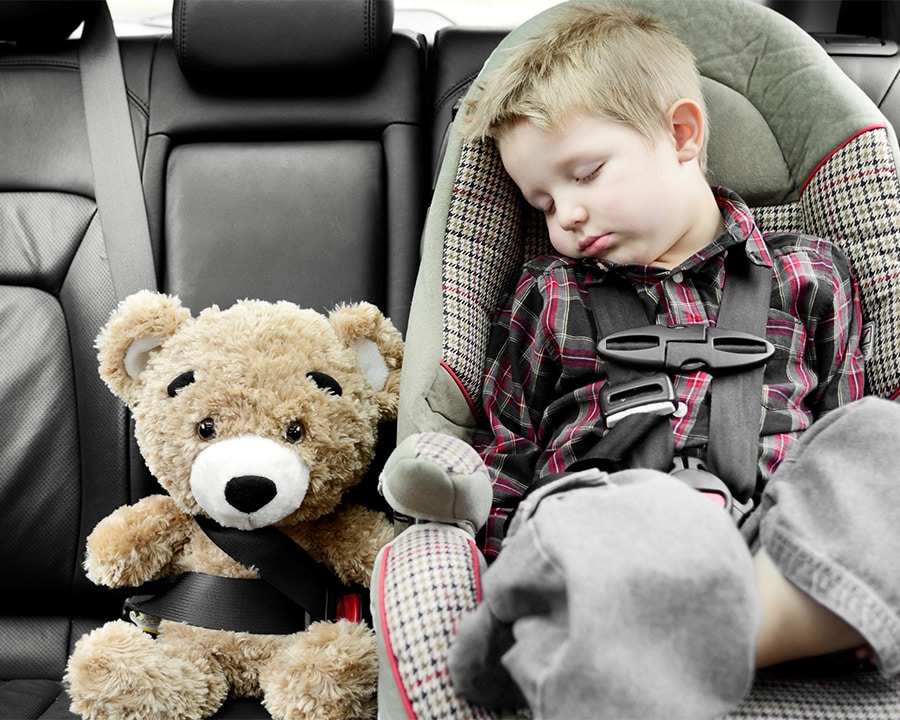
As a childcare provider, keeping children safe is your top priority. Following state and federal guidelines for transportation safety can help make that happen. In this blog we provide links to state and federal transportation safety guidelines. Additionally, we share some tips to help keep children safe at drop-off and pick up time, and when riding in their parents’ vehicles.
Keeping Children Safe — State and Federal Transportation Regulations
Each state has its own regulations regarding acceptable transportation practices for childcare programs. You must abide by your state’s vehicle and transportation requirements. Many states require transportation safety training for child care providers.
If your program uses a passenger vehicle to transport children, review your state’s laws for the use of car seats and booster seats on the Governors Highway Safety Association website. In addition to using appropriate child safety restraints, you must also follow your state’s child care regulations for selecting a driver. By the same token, pay very close attention to your state’s regulations for adult/child ratios during transportation. In some states, the driver is counted for ratio purposes, in other states the driver cannot be counted. Be sure to learn these important details before you transport children in a passenger vehicle.
There are Federal Motor Vehicle Safety Standards set by the National Highway Traffic Safety Administration (NHTSA) specifically for school buses and multi-function school activity buses (MFSABs). Not sure if your program’s large vehicle is a MFSAB or a school bus? View The National Child Passenger Safety Board’s handout explaining how to tell the difference.
Each state has its own requirements for the maintenance of vehicles used to transport children.
Whether your state requires it or not, it is wise to use a vehicle inspection checklist and keep a record showing that any vehicle you use to transport children has been maintained to ensure proper working order and cleanliness.
Above all, learn and follow the regulations of your individual state. Find your state’s regulations in the National Database of Child Care Licensing Regulations.

Keeping Children Safe with a Written Transportation Policy
Most states require programs that transport children to create a written transportation policy. This policy is used to document driver’s records, staff training, vehicle maintenance, route planning, parent permission slips, emergency medical information, and other factors that contribute greatly to the children’s safety. Definitely check your state regulations to learn other components you must include in your program’s transportation policy.
Even if your program does not provide transportation, a written transportation policy can help ensure children’s safety at the time of drop-off and pick-up. Checklists to account for children and a check-in and check-out system can help avoid accidental injuries. Moreover, your program’s transportation policy is an opportunity to inform parents about where to park, and to recommend that they turn off their vehicles during the drop-off and pick-up process.

Why is idling bad?
The US Environmental Protection Agency (EPA) recommends implementing a no-idling policy to improve the air quality in an around your facility.
Idling is bad because:
- Car exhaust contains toxins which can cause cancer, respiratory effects and other health issues.
- Chemicals from exhaust are harmful and make asthma worse.
- Children’s developing lungs are more susceptible to air pollution than adults.
- A “Hot Spot” of pollution is created when many vehicles idle at once in a drop off/pick up zone.
Share this handout with parents, encourage them to pledge to be idle free! The EPA recommends turning off vehicles if they will be sitting idle for more than 10 seconds. Not only is idling a source of unhealthy pollution, it can also damage vehicle engines and is a waste of costly fuel. Most people waste 1–2 entire tanks full of gas every year by idling!
Transportation Safety tips to Share with Parents
The NHTSA website provides guidance to help parents select the appropriate car seat for their child based on their age and size. The website also includes a section where parents can register their child’s car seat in order to receive alerts about recalls and safety notices from the car seat’s manufacturer, and the NHTSA.
Undoubtedly, a car seat only provides safe transportation for a child if it is installed and used properly. According to NHTSA, 46% of car seats and booster seats are installed incorrectly. To help remedy this, parents can have their car seat inspected by a certified technician free of charge. In most cases, certified technicians also show parents how to correctly install and use car seats. Encourage parents to use the NHTSA search tool to find a local certified technician.
Furthermore, NHTSA also recommends that parents be aware of the danger of heatstroke for children when they are left in or sneak into a hot car. An average of 37 children die per year due to vehicular heat stroke. A vehicular heat stroke can occur when the outdoor temperature is 57 degrees or more. The “Park. Look. Lock.” campaign recommends that parents get in the habit of always checking the back seat of their vehicle and always locking the doors.
Make time to share transportation safety tips with parents. It can save children’s lives!

Want to learn more ways to keep children safe?
Read our blog Top Five Misconceptions about Sun-Safety. For more information about safety in and around vehicles, take our course Transportation Safety. This course includes recommendations to help you create your program’s transportation policy, checklists, and more.
Care Courses Contact
Please let us know how we can be of additional assistance! Call us: 1–800–685‑7610, Monday through Friday, 9–5 ET, or email us days, evenings and weekends: info@CareCourses.com. We’re here to help!



Leave a Reply