

In today’s blog we will discuss the role of play in children’s development and how you can facilitate children’s learning through play.
Topics for promoting play in early childhood are covered in detail in our course, Play and Learning in Early Childhood.
The role of play in children’s development
Play can be defined as children’s spontaneous, self-directed, self-chosen, and self-paced activities. Play integrates children’s experiences in multiple areas of learning. For example, while playing “restaurant” young children may scribble orders, set prices, pretend to read menus, count play money, or apply the concept of quantity to serve meals to a specific number of “customers,” learning a lot more than they would have by completing a worksheet, while having fun.
During play, children make decisions, are motivated by their natural desire to explore and understand the world around them, and become fully immersed in the process. During play, children follow their curiosity, strengthen their problem-solving skills, experiment with a variety of approaches to reach goals, and keep trying until they feel successful.
Play accelerates children’s brain development and promotes learning in all domains. You can play an important role in promoting the benefits of children’s play by selecting appropriate play materials, providing an exciting learning environment, and being responsive to children’s interests.
Choosing play materials
A thoughtful selection of play materials helps maximize the effectiveness of play in promoting development and learning.
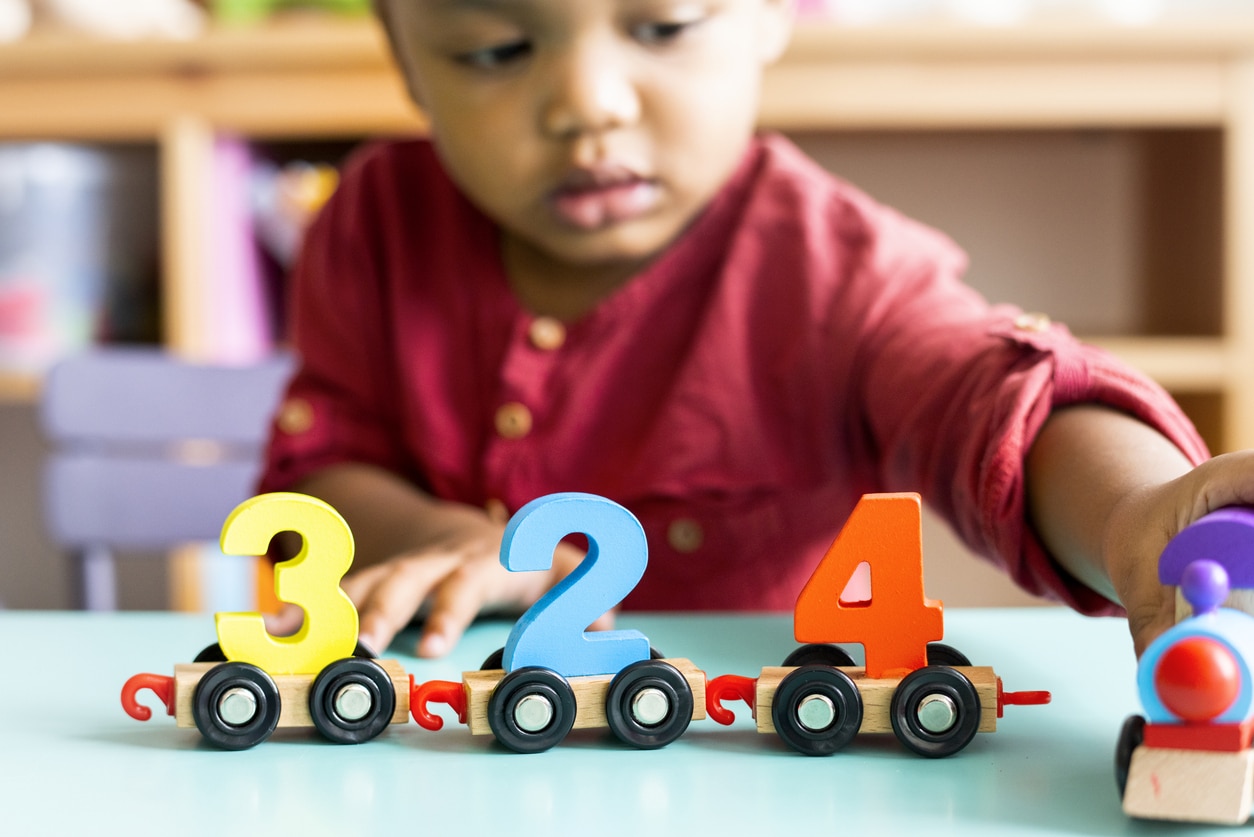
- Open-ended toys can be used in many different ways and promote experimentation and creativity. Toys such as blocks, play food, dress-up clothes, and water tables allow children to experiment and use their imagination.
- Closed-ended toys have a definite use and ending point. For example, puzzle and shape sorter activities are finished once they are assembled. They are good for building attention and learning to complete a task.
- Loose parts are materials that have no particular or defined purpose. Having loose parts available to children encourages creativity and imagination. Examples of loose parts include cardboard boxes, stones, scarves and fabric, and plastic bottles.
Variety ensures that children enjoy many different types of learning experiences. Include play materials that offer varying levels of difficulty. Blocks are a perfect example of toys that challenge children at every level of development.
While ensuring that certain toys, such as blocks, are always available, rotate the array of toys and materials available for children’s use at any one time. Children will show much more interest in items that have been put away for a time than items that are always available.
Designing the learning environment
An inviting and functional play environment allows children to engage with play materials to their fullest extent. When designing your play environment, consider the following questions:
- Are learning areas clearly defined and easy to supervise?
- Is there adequate space for noisy and active play?
- Are active areas close to each other and separated from quiet spaces?
- Is there a cozy area for children to relax and enjoy quiet-time?
Facilitating play
Your responsiveness to children’s needs and interests is critical in promoting the benefits of play. When supervising children’s play, consider the following educational strategies:
- Offer play experiences that correspond to children’s interests, diverse abilities, and learning styles.
- Engage children in making decisions.
- Carefully observe children’s play and judge the amount of time, support, and guidance they need at any given time.
- Observe and record each child’s development to assess their individual needs, milestones to be reached, and set goals.
- Frequently reevaluate and assess the play and learning environment to ensure that it continues to provide appropriate challenges as children progress along the path of development and learning.
- Schedule the day so that children have plenty of uninterrupted, unrushed time to engage in play and learning.
Care Courses’ Play and Learning in Early Childhood Course
Learn more about the fundamental role of play in young children’s development, stages of play, benefits of different types of play, and how you can support children’s learning through play in our course, Play and Learning in Early Childhood.
Care Courses Support
Please let us know how we can be of additional assistance! Call us: 1–800-685‑7610, Monday through Friday, 9–5 ET, or email us days, evenings, and weekends: info@CareCourses.com. We’re here to help!





Leave a Reply