
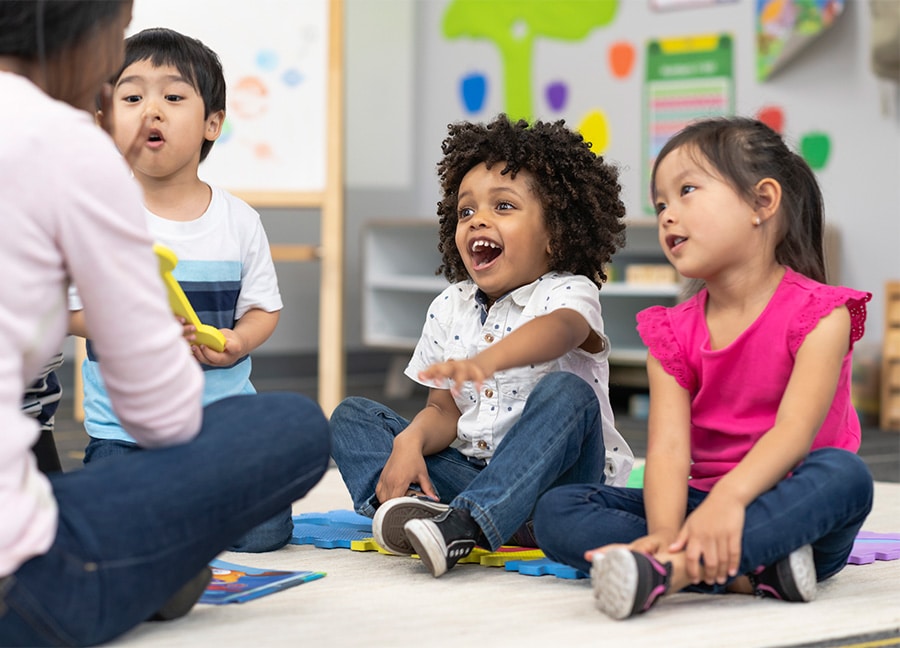
In this blog we will discuss 10 ways to support dual language learners’ home language in childcare. A home language is the language most spoken by the family members in a child’s home. The language spoken in a child’s home is the first language that they are exposed to. Even before birth, a child is exposed to and becomes accustomed to some of the sounds and rhythms in their home language!
Supporting DLLs’ continued development and maintenance of home language proficiency in your child care program is an essential part of nurturing their language development. Furthermore, creating a learning environment that welcomes and celebrates all languages and cultures enriches the educational opportunities for all of the children in your group.
Who are Dual Language Learners?
Dual language learners (DLLs) are children under the age of five who are learning two languages. Categories of DLLs include simultaneous DLLs and sequential DLLs.
Simultaneous DLLs are learning two languages at the same time. This includes children who are exposed to two languages from birth or before age three. They typically have parents or family members who speak both languages at home. They may also hear one language at home and attend a program that primarily uses another language.
Sequential DLLs are children who are learning a second language after they have started speaking in their home language. Children acquiring languages sequentially learn another language while continuing the development of their first language.
Nevertheless, both simultaneous and sequential DLLs have the opportunity to become bilingual when they are provided appropriate encouragement to continue using their home languages.

Why Is It Important to Support Dual Language Learners’ in Childcare?
It is of utmost importance for English speaking child care programs to encourage DLLs to develop proficiency in their home languages as well as the program language.
DLLs’ mastery of their home languages helps facilitate and strengthen their relationships with family members who only speak those languages. Home languages also provide a strong link to each family’s culture. Preserving and nurturing these languages within your child care program fosters a sense of pride and belonging among DLLs. Additionally, it shows value to every child’s unique cultural background.
Apart from this, DLLs’ mastery of their home languages has also been shown to contribute to their school readiness and school success. Research shows that bilingual children show enhanced executive functioning skills, attention control, and problem-solving abilities. Ultimately, integrating home languages into child care programs sets dual language learners up for future academic success.
Encouraging the use of home languages in English speaking child care programs also helps create welcoming multicultural environments in which children can learn to respect their peers and value diversity. Moreover, exposure to multiple languages from a young age promotes cultural awareness and empathy.

10 Ways to Support Dual Language Learners’ Home Language in Childcare
The following list includes 10 ways you can encourage the use of children’s home languages in your program:
- Hire bilingual staff, whenever possible.
- Learn key phrases from each child’s home language, and incorporate use of those phrases into daily classroom routines.
- Include both the program language and the children’s home languages on your shelf labels, picture schedules, and other visual supports. Provide copies to each family for them to review at home.
- Provide newsletters and other correspondence for the parents in their home language whenever possible.
- If necessary, use an interpreter for parent conferences to facilitate parent involvement in your program.
- Encourage families to continue exposing their children to their home language.
- Invite families to visit and share songs, stories, and traditions with the children. Add these songs to your background music playlists used for nap time and play time!
- When communicating with children, use gestures and objects to help illustrate the meaning of new words.
- Respond respectfully and consistently to children’s attempts to communicate, even if they misuse words or code switch.
- Provide opportunities for children to engage in conversations with peers that speak their home language, as well as peers who speak the program language.
View NAEYC’s tip sheet for more ideas! The Headstart Early Childhood Learning & Knowledge Center website also provides tips and strategies to help reinforce the use of home languages.

Last but not least, try Head Start’s Ready DLL “Survival Vocabulary” app
Of course, it is ideal for you to communicate directly with DLLs’ parents to learn key phrases in their home language, if possible. Parents may be willing to share commonly used words and phrases from their home routine, and may provide you guidance on how to appropriately pronounce each phrase. However, if you would like to study further on your own, Head Start’s Ready DLL app includes flashcards that can be helpful if you are trying to learn “survival vocabulary” in Spanish, Arabic, Mandarin, Haitian, Russian, Somail, or Vietnamese. The “survival” words included in the app are:
| Yes No Help Hello Goodbye More | My name is What is this Thank you Rest Play Eat | Hungry Drink Thirsty Bottle Hurt Stop | Bathroom Milk Wash hands Sit down Clean up |
The app also includes many suggestions that can help you build and maintain a culturally diverse learning environment.
Want to learn more about how to support dual language learners in your child care program?
Take our course Language Development: Milestones, Theories, and Dual Language Learners.
Care Courses Contact
Please let us know how we can be of additional assistance! Call us: 1–800–685 7610, Monday through Friday, 9–5 ET, or email us days, evenings and weekends: info@CareCourses.com. We’re here to help!



Leave a Reply